Safety in woodturning: why it matters
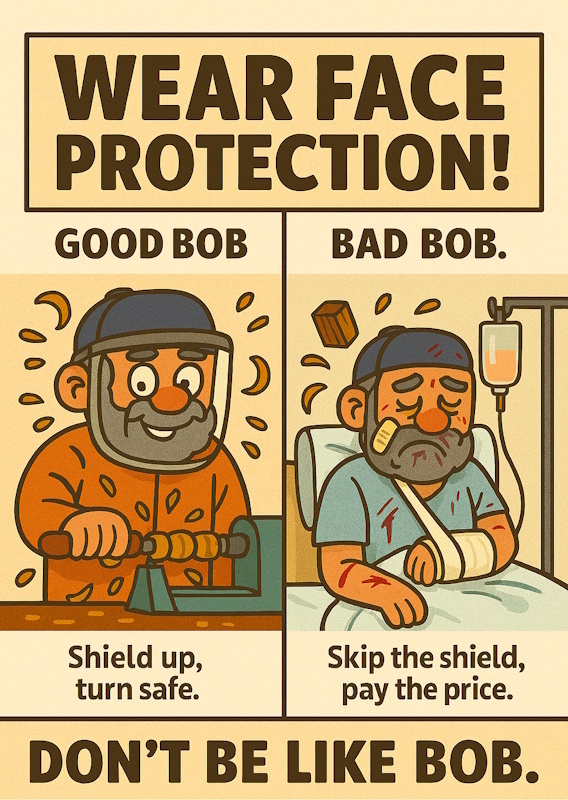 Safety reminder cartoon
Woodturning is a rewarding craft, but it comes with real risks. A lathe is a powerful machine, and accidents can happen with blinding suddenness, while long‑term health issues—especially from fine wood dust—can build quietly over years. Both immediate hazards and long‑term risks make safety a responsibility that cannot be ignored.
Safety reminder cartoon
Woodturning is a rewarding craft, but it comes with real risks. A lathe is a powerful machine, and accidents can happen with blinding suddenness, while long‑term health issues—especially from fine wood dust—can build quietly over years. Both immediate hazards and long‑term risks make safety a responsibility that cannot be ignored.
Common hazards
- Flying debris and projectiles: Poorly secured, unbalanced, or cracked blanks can break apart at speed, turning fragments into dangerous projectiles.
- Dust and respiratory risks: Fine wood dust (including from certain species) can cause allergic reactions, eye irritation, and chronic respiratory problems.
- Snagging hazards: Loose clothing, jewelry, and long hair can catch on spinning workpieces or protruding hardware.
- Unsafe examples online: Popular videos sometimes model risky practices that look impressive but violate basic safety principles.
Safe practices
- Wear proper protection: Use a full‑face shield for impact protection and a quality dust mask or respirator for airborne particulates.
- Inspect and secure your setup: Check blanks for cracks/defects; mount securely; start at low speed; ensure toolrests and tailstocks are properly set.
- Manage dust effectively: Combine source capture, ambient filtration, and good shop ventilation; clean surfaces to reduce settled dust.
- Stay focused: Avoid fatigue and distraction; keep your stance balanced and hands clear of pinch points.
- Follow proven guidelines: Rely on vetted safety practices from reputable sources rather than informal tips or showmanship.
Why you should explore our safety resources
Safety isn’t just about protecting yourself—it’s about protecting those around you and ensuring you can enjoy turning for years to come. That’s why the Guild has built a dedicated
Resources/Safety section
with curated articles, links, and guides that go beyond the basics—covering dust collection strategies, safe lathe setups, tool handling, and demonstration best practices. If you’re serious about woodturning, make it a habit to revisit these resources regularly. They’ll help you sharpen awareness, avoid preventable accidents, and build safe habits that last a lifetime.
Make safety part of your routine
The best projects start with safe practices: think through your setup before you switch on the lathe, choose appropriate speeds for the workpiece, keep PPE within reach, and pause when something feels off. By treating safety as a core skill—just like tool control or form—you protect your health, extend your craft, and set a strong example for others in the shop.
Visit our Resources/Safety section today, and make safety part of every session at the lathe.